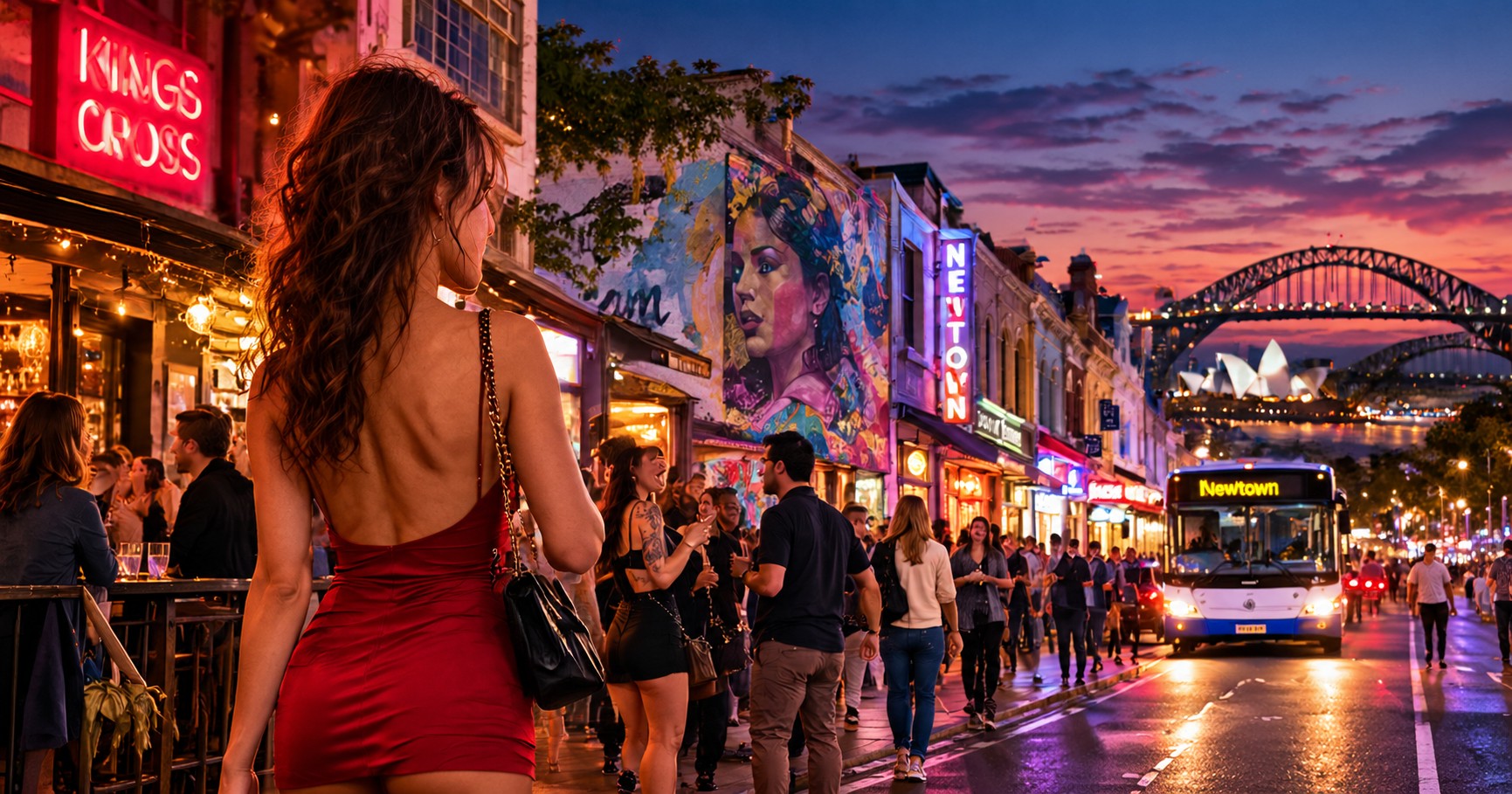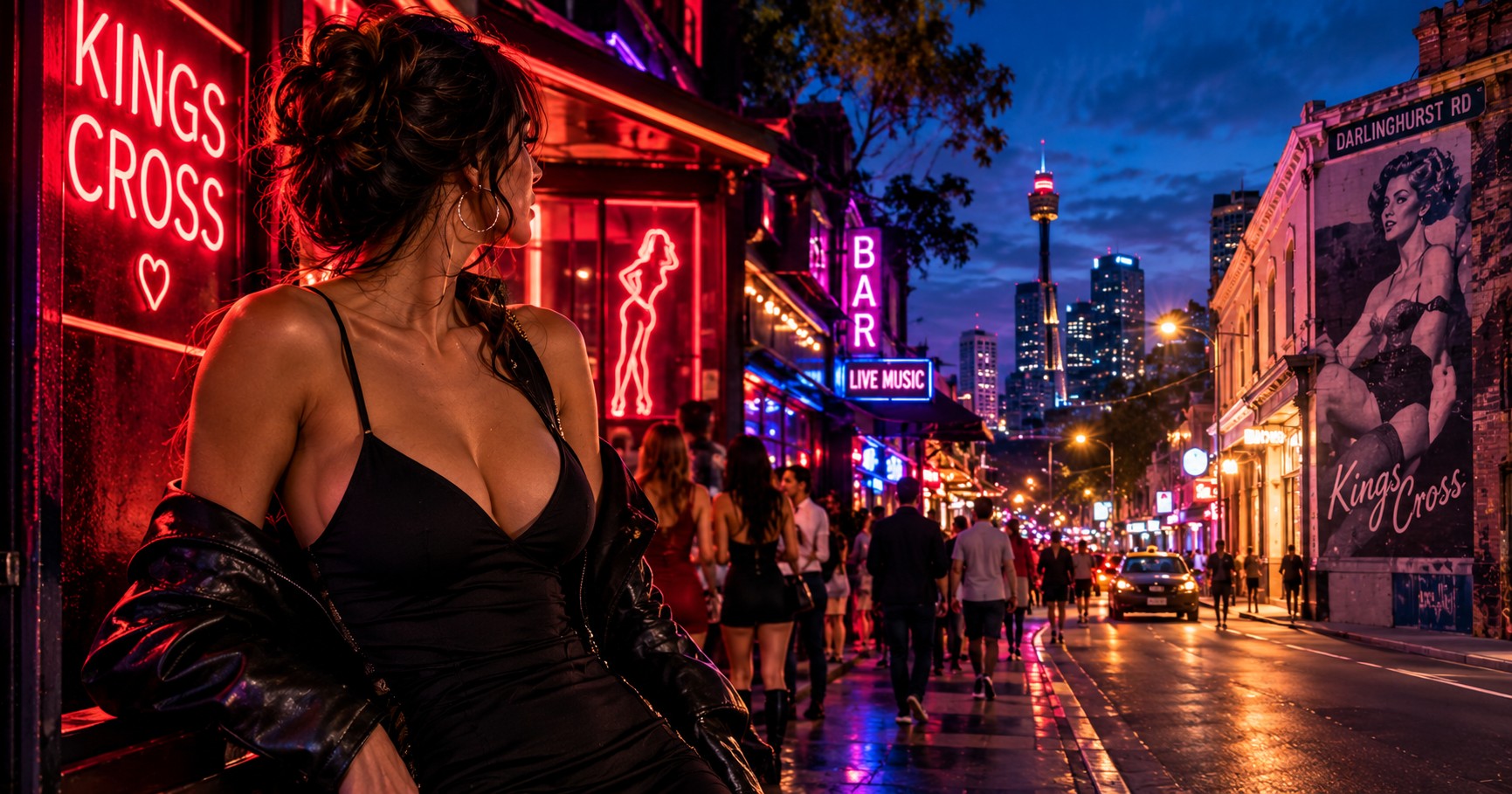
What Happened to Kings Cross? Sydney's Changing Adult Entertainment Scene
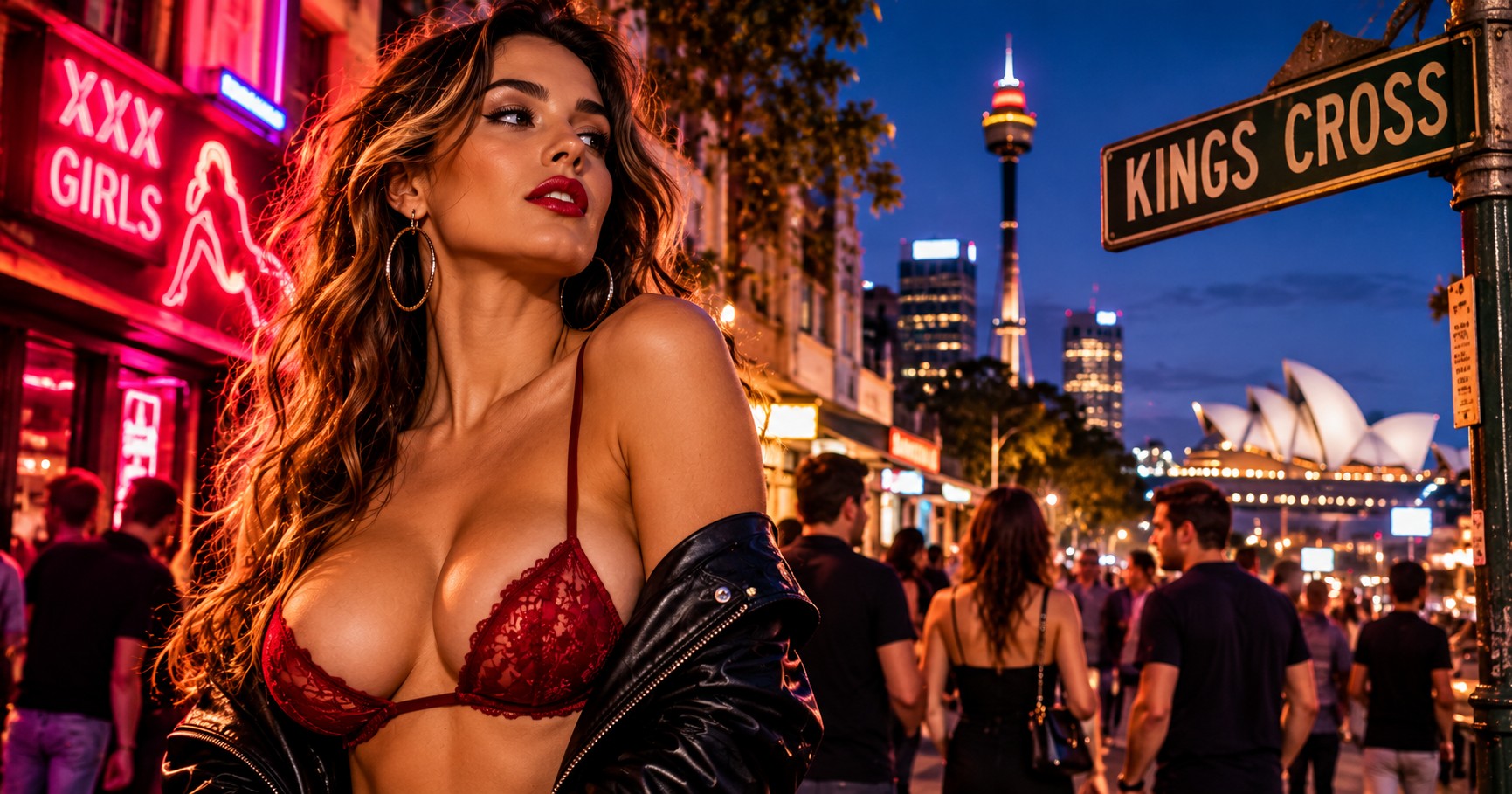
Once Sydney's most notorious red-light district, Kings Cross has traded some of its neon for wine bars and apartment keys. The adult industry, however, didn't pack a suitcase and disappear.
There was a time when telling someone you were going to Kings Cross at midnight was practically a personality test.
Their reaction ranged from "Have fun" to "Call me when you get home" — occasionally from the same person.
The Cross had strip clubs, nightclubs, sex workers, artists, backpackers and people who insisted they were "just there for a drink".
Of course they were, darling.
Today, parts of Darlinghurst Road are considerably more polished. The old red-light reputation survives in photographs, headlines and the sort of Sydney nostalgia that becomes conveniently selective after two glasses of shiraz.
But asking where all the naughty stuff went misses a more interesting question.
Who decided what counted as respectable in the first place?
The Cross Was Never Just a Red-Light District
Kings Cross has been many things: a bohemian refuge, a live-music neighbourhood, a nightlife magnet and a home to generations of residents whose lives had very little to do with anyone's Saturday-night adventure.
By the mid-twentieth century, it was known for bars, strip venues and sex work. But it also attracted writers, migrants, musicians and people who didn't fit neatly into Sydney's preferred social categories.
The people buying a thrill could go home and call the district colourful.
The people working there had to deal with the less photogenic parts: stigma, insecure conditions and strangers who mistook a job for an invitation to behave badly.
Funny how nostalgia remembers the neon more clearly than the women standing beneath it.
Kings Cross was entertaining, certainly.
But romanticising every part of its past requires a rather impressive ability to overlook the unpleasant bits.
Lockout Laws: A Safety Measure With a Hangover
The turning point everyone remembers is 2014.
After fatal assaults and serious concerns about alcohol-related violence, NSW introduced a 1.30 am lockout and 3 am last drinks across designated late-night entertainment areas.
The safety problem was real.
So was the damage to the night-time economy.
Research documented falling assaults, while venues lost trade and parts of Sydney's live-music scene struggled.
Reducing violence mattered. Pretending there were no other consequences would be equally foolish.
Kings Cross's 1.30 am lockout was lifted in 2021. In January 2026, the NSW Government announced the removal of the remaining major blanket restrictions, including the 3.30 am last-drinks rule.
But you cannot legislate a neighbourhood's personality back into existence.
A venue that closed years ago doesn't reopen simply because someone in Parliament finally finds the off switch.
More importantly, Sydney's adult industry had already begun changing long before the lockout laws arrived.
Sex Work Didn't Disappear. The Shop Window Changed.
For years, Sydney's adult entertainment was associated with visible premises and recognisable streets.
Today, much of the conversation begins online: profiles, messages, screening and arrangements made before anyone meets.
That transformation didn't happen overnight, and it certainly wasn't caused by one drinking law.
Technology, privacy and changing working preferences all played a part.
It also helps to stop treating the entire adult industry as one business model.
A strip club isn't a brothel.
An independent escort isn't a nightclub.
And a woman choosing how to advertise her services isn't obliged to become part of the city's tourist attractions.
For adults exploring professional companionship, online directories featuring Sydney escorts offer a way to compare individual profiles, locations and contact preferences without relying on a famous red-light address.
That creates choices, not guarantees. Fake profiles, impersonation and scams still exist, so sensible screening and clear communication remain essential.
The internet didn't make the industry magically safe.
It made parts of it less visible.
Those are two very different claims.
Legal Doesn't Always Mean Welcome
Here's a detail often missing from dramatic stories about Sydney's disappearing vice.
New South Wales decriminalised sex work in 1995, bringing sex-services premises within the planning system rather than treating their operation as inherently criminal.
That didn't mean every location or business arrangement became automatically permissible.
And it certainly didn't eliminate stigma.
A woman can operate within the law and still encounter people who treat her livelihood as a threat to civilisation.
Apparently, civilisation is remarkably fragile when a woman sends an invoice for her time.
The important questions are considerably less theatrical.
Can sex workers set boundaries?
Can they report violence?
Can they expect the law to take their consent seriously?
Our article on when not paying an escort becomes sexual assault in NSW examines why deliberately deceptive payment arrangements can become a question of consent, rather than simply an unpaid bill.
That's a far more useful measure of progress than counting how many red neon signs remain on Darlinghurst Road.
And it's one reason the history of adult entertainment should include the people providing the services, not just the customers buying them.
It Isn't Only a Sydney Story
Adelaide has its own example.
Hanson Road's former red-light reputation has outlived much of the street activity once associated with it.
Our look at what happened to Adelaide's notorious Hanson Road red-light district explores how redevelopment, policing and online advertising helped reshape that area.
The legal frameworks aren't identical across Australian states, and neither are the neighbourhoods.
But the pattern is worth noticing.
A district becomes famous for visible adult work. The city changes. The old signs disappear.
Then outsiders confidently announce that the entire industry has evaporated.
Often, they've merely stopped looking in the same place.
It's rather like declaring the death of shopping because your favourite department store closed.
Meanwhile, everyone else has discovered the internet.
So What Is Kings Cross Now?
Still a neighbourhood.
Still somewhere people eat, drink, live and go out.
Just no longer Sydney's convenient one-stop symbol for everything considered a little wicked.
And perhaps that's not entirely a tragedy.
For a broader look at where some of the city's late-night energy is gathering, our earlier article, Sydney After Dark: How Kings Cross Lost Its Crown and Newtown Took Over, explores the contrast between the old Cross and Newtown's lively King Street.
But Kings Cross doesn't need to become Newtown.
Nor does it need to recreate its 1980s reputation, complete with every unpleasant aspect that nostalgia conveniently edits out.
A city's character changes because its people, businesses and priorities change.
That's life.
What matters is whether the next version makes room for different kinds of nightlife, respects the people working within them and avoids confusing moral discomfort with public safety.
The Neon Has Faded. The Hypocrisy Hasn't.
I have a weakness for old neon signs, but considerably less patience for the suggestion that Sydney was better when adult entertainment meant women being part of the streetscape while everyone else wrote the story.
Kings Cross deserves its colourful history.
It also deserves a future that isn't permanently trapped inside it.
As for Sydney's adult entertainment industry?
It never needed one particular street to justify its existence.
The signs may have dimmed. The businesses have evolved. The customers have found new ways to connect.
And the women working in the industry were never merely part of the decoration.
Perhaps that's the part of Kings Cross history worth remembering.