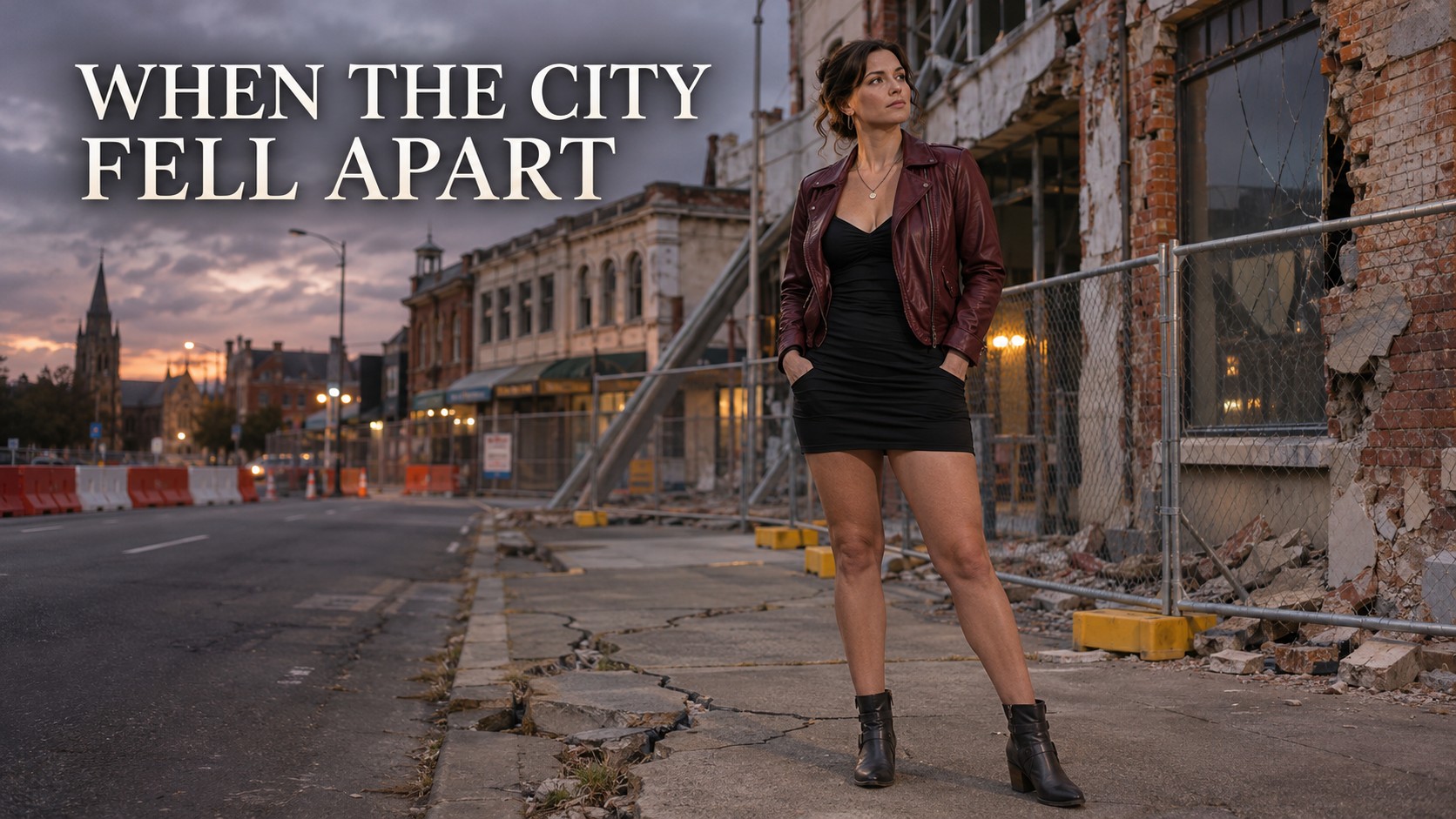
After the Christchurch Earthquake, Even Sex Workers Had Nowhere to Go
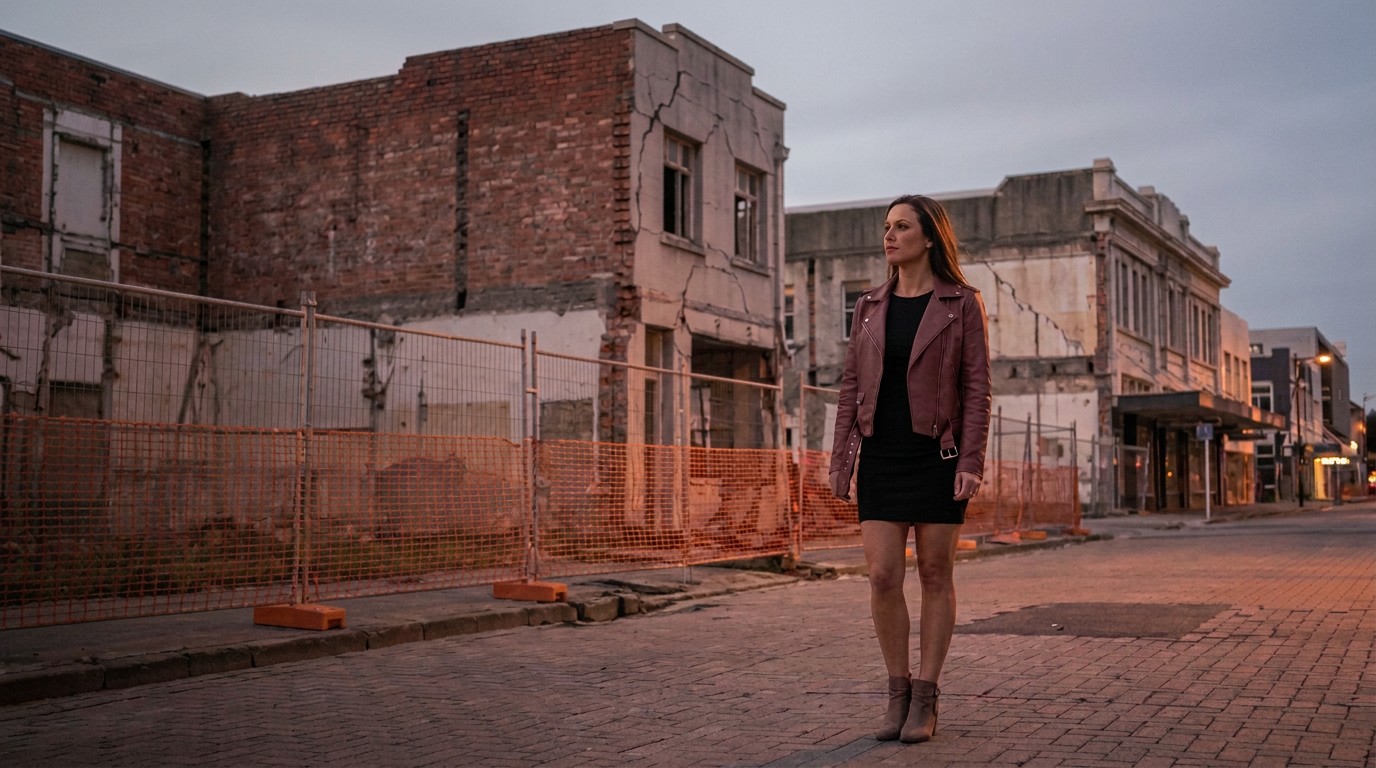
When Christchurch's earthquake forced sex workers out of their usual streets, an unexpected neighbourhood battle began. Apparently, rebuilding a city is easier than agreeing on who belongs in it.
There are certain things you'd expect people to argue about after a major earthquake.
Damaged houses. Insurance companies. Roadworks that seem to last approximately three human lifetimes.
Public toilets probably wouldn't make your top ten.
Yet in Christchurch, after the devastating February 2011 earthquake, toilets became part of a surprisingly bitter argument involving sex workers, angry neighbours and the city council.
And behind that rather unglamorous dispute was a much bigger question.
When a city is rebuilding itself, who gets to decide which people belong in the new version?
The Earthquake Didn't Just Destroy Buildings
Before the earthquakes, Christchurch's street-based sex workers had traditionally operated around the southern end of Manchester Street, near the central city.
It wasn't exactly a secret.
People knew where the industry operated, even if polite society preferred not to discuss it over Sunday lunch.
Then came 22 February 2011.
The earthquake devastated central Christchurch, destroying buildings, damaging roads and forcing entire sections of the city behind safety cordons.
For most people, the immediate problems were obvious. Homes had been lost. Businesses were closed. Families were displaced.
But the destruction also disrupted an industry that rarely appears on the official list of earthquake casualties.
Sex workers lost access to familiar working areas.
Some moved north along Manchester Street, past Bealey Avenue, towards the residential neighbourhoods of St Albans and Edgeware.
And suddenly, a very old industry had some very unhappy new neighbours.
Nobody Particularly Wanted New Neighbours at 2 am
It's easy to dismiss this as another example of middle-class outrage.
But that wouldn't be entirely fair.
Some residents reported noise, rubbish, threatening behaviour and people conducting rather personal business in places where nobody had invited them.
A few said the disruption had become unbearable.
And frankly, if somebody is leaving used condoms in your garden, you have every right to be annoyed.
You don't need to be a moral conservative to object to that.
But there's an important distinction between complaining about antisocial behaviour and deciding that an entire group of workers shouldn't be allowed anywhere near your neighbourhood.
That distinction became rather blurred.
For residents, the issue was their homes.
For sex workers, it was their livelihood and personal safety.
Both sides had legitimate concerns. Neither could wish the other away.
The earthquake had created a problem nobody particularly wanted to own.
Christchurch's Most Uncomfortable Bathroom Conversation
By 2012, street-based sex workers were asking Christchurch City Council for something remarkably ordinary.
Better lighting.
Safer working areas.
And public toilets.
Not luxury apartments. Not a five-star lounge with complimentary champagne.
Toilets.
Much of the central city's infrastructure had been damaged or demolished. Facilities that people previously relied upon were no longer available.
Some workers were travelling considerable distances to find a bathroom.
Others had very few practical options.
The situation would almost be funny if it weren't so unnecessarily miserable.
Imagine working nights in a badly damaged city, worrying about your safety, and then discovering that even finding somewhere to use the toilet has become a political issue.
In 2015, Christchurch sex worker Anna Reed spoke publicly about the shortage of facilities. Her argument was perfectly sensible: public toilets weren't exclusively for sex workers. Other people needed them too.
Yet somehow, a discussion about basic infrastructure had become tangled up with arguments about morality.
Christchurch could rebuild complicated roads and commercial buildings.
But providing somewhere to have a wee? Apparently, that required a philosophical debate.
The Real Problem Wasn't Just Manchester Street
Something is revealing about the way cities handle industries they consider embarrassing.
When a popular café opens, people talk about neighbourhood character.
When a hotel expands, they discuss economic development.
When sex workers appear, the conversation suddenly becomes about protecting the community.
Protecting it from what, exactly?
Actual antisocial behaviour deserves a response, regardless of who's responsible.
But sex workers standing on a public street aren't automatically a threat simply because their profession makes somebody uncomfortable.
The distinction matters.
It also explains why this wasn't merely another argument about Christchurch's changing escort industry.
The earthquake exposed a much older tension between private morality and public space.
People wanted the problems associated with street-based sex work addressed.
Sex workers wanted somewhere they could earn a living without placing themselves in unnecessary danger.
And the council was left trying to satisfy people who didn't necessarily agree on what the problem was.
Good luck with that.
The Council Eventually Tried Something Different
By 2017, the argument had been going on for years.
Some Manchester Street residents wanted Christchurch City Council to introduce a bylaw restricting where street-based sex workers could operate.
The New Zealand Prostitutes' Collective opposed that approach, warning that it could effectively push workers back towards criminalisation and make them less willing to seek police assistance.
The council's regulatory committee ultimately recommended against introducing the proposed bylaw.
Instead, the city moved towards cooperation between residents, support organisations, police and sex-worker advocates.
An outreach programme subsequently helped workers access safety information and support while attempting to reduce neighbourhood tensions.
It wasn't a magical solution.
People still disagreed. Some residents felt their concerns weren't being adequately addressed.
But at least the conversation had begun moving beyond the familiar political strategy of telling an unpopular group to go somewhere else.
Because, of course, somewhere else is usually somebody else's neighbourhood.
What Christchurch Forgot During the Rebuild
Christchurch has spent years rebuilding its physical identity.
New buildings. Revitalised public spaces. Restaurants, bars and an increasingly confident central city.
And much of that deserves celebrating.
But the Manchester Street dispute reveals something less comfortable about rebuilding.
A city isn't just its architecture.
It's also the people working strange hours, earning their living in unconventional ways and occupying spaces that don't appear in glossy tourism campaigns.
Street-based sex work is only one part of New Zealand's wider adult industry. Modern independent escorts, agencies and private workers operate in very different circumstances.
And as Christchurch's own history shows, the industry existed long before online advertising or modern sex work laws.
But there's a common thread running through those different eras.
Society is often comfortable acknowledging that sex work exists.
It becomes considerably less comfortable when the people doing it need something.
A safe place to work.
Access to basic facilities.
Or simply the right to be considered when decisions are made about the city they live in.
Perhaps that's what makes this particular Christchurch story so interesting.
The earthquake didn't create the city's complicated relationship with sex work.
It simply knocked down enough buildings for everyone to see.
And while Christchurch has become rather good at putting buildings back together, the question of who truly belongs in the city remains a little harder to settle.